Shingles get most of the attention when people talk about roofs. Color, warranty length, impact rating. Yet the material is only half the story. The other half is the group of people who measure, order, tear off, install and inspect it. A premium shingle put on by a rushed or poorly coordinated crew can fail years before its rated lifespan.
More roofing companies now show homeowners exactly who they will be dealing with, and that small detail says a lot. Hardworking Roofing and Construction, a roofing and general contracting firm in Oklahoma City, introduces its people on a dedicated team page, so visitors can see the faces behind estimates, project management and field work before anyone climbs a ladder. Seeing those roles laid out is a useful way to understand how a well organized roofing job actually runs.
That understanding pays off in a state like Oklahoma, where a single spring hailstorm can send thousands of homeowners looking for help in the same week. When demand spikes, the difference between a coordinated team and a loose group of subcontractors becomes very easy to see.
Registration Comes Before the First Nail
Before talking about who does what, it helps to know who is allowed to do it at all. Oklahoma requires roofing contractors to register every year with the state. According to this Oklahoma Construction Industries Board notice on roofing registration, working as a roofing contractor without a valid registration is a misdemeanor, and each violation can bring a fine of up to $500.
The same notice explains an important detail about crews. Workers hired by a registered roofer and working under that roofer’s direct supervision do not need their own registration. In other words, the registration sits with the company, and the company is responsible for everyone it sends to your house. That is exactly why knowing the structure of a team matters. You are not just hiring a brand. You are hiring the chain of supervision behind it.
Who Shows Up and What They Do
A typical residential reroof involves more people than most homeowners expect. Titles vary between companies, but the core roles look something like this.
The estimator or inspector. This is usually the first person you meet. They walk the roof, photograph damage, check decking softness, note ventilation and flashing problems, and turn all of it into a written scope. A careful estimator prevents surprises later, because hidden issues like rotted sheathing are flagged and priced up front.
The project manager. Once a contract is signed, this person handles scheduling, material orders, permits and communication. When an insurance adjuster needs supplemental photos or a delivery gets delayed by weather, the project manager is the one solving it. Good ones keep homeowners updated without being chased.
The crew lead. On install day, the crew lead runs the roof. They decide tear off sequence, watch nailing patterns, check that underlayment and drip edge go down correctly, and make calls when the crew uncovers something unexpected. Experience here shows up directly in how straight the courses run and how clean the valleys look.
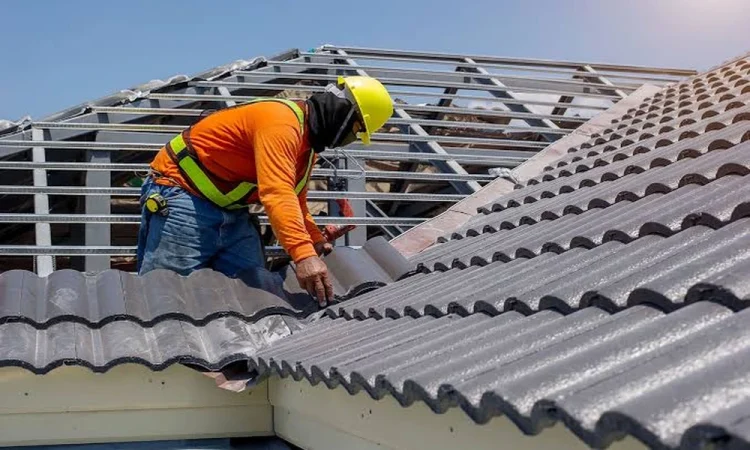
The installers. These are the people doing the physical work in heat, wind and sometimes cold. Their skill determines whether nails land in the correct zone and whether flashing around chimneys and walls is layered to shed water rather than trap it.
The office and support staff. Often invisible, they process warranties, handle billing and keep records. Years later, when you sell the house or file a claim, those records become surprisingly valuable.
Safety Is a Team Habit
Roofing ranks among the riskier trades in construction, and falls are the main reason. Federal rules generally require fall protection once construction workers are six feet or more above a lower level, and the OSHA fall prevention campaign sums up its approach in three steps: plan the job, provide the right equipment and train workers to use it.
That framework is really a description of teamwork. Planning happens in the office and with the crew lead. Equipment has to be bought and maintained by the company. Training needs leadership that takes it seriously every day, not just on paper. A company that invests in its people tends to invest in these habits too, and that protects homeowners as well. Injuries on your property create delays, stress and sometimes liability questions nobody wants.
Storm Season Tests Every Crew
The roofing industry has changed noticeably in the past several years, and much of that change runs through the team rather than the product.
Impact resistant shingles, often rated Class 4, have become a common request in hail country. Installing them properly still depends on the same fundamentals: correct nailing, sound decking and good ventilation. A strong rating cannot make up for weak workmanship.
Documentation has also grown more detailed. Many estimators now use drones, satellite measurement tools and photo reports to record damage and measure roofs without unnecessary foot traffic on fragile shingles. Those reports help adjusters, speed up claims and give homeowners a clear record of what was done.
Then there is the storm chasing problem. After major hail events, out of area crews sometimes arrive, knock on doors, and leave once the work dries up. Homeowners can end up with warranties nobody honors. A local team with a visible roster and a physical office offers something different. You know who to call if a leak appears eighteen months later.
Reading a Roofing Team Before You Sign
Learning about a contractor’s people does not require a long interview. A few simple questions reveal a lot. Ask who will be your main point of contact from contract to final walkthrough. Ask whether the installers are company employees or subcontracted crews, and who supervises them on site. Ask how long the crew lead has been doing this kind of roof. Ask what happens if decking damage is found halfway through the tear off, and who approves the extra cost.
The answers tell you whether the company has a real structure or is improvising. Confident, specific replies usually point to a team that has handled these situations many times. Vague answers or frequent “we’ll figure it out” responses deserve a second look.
It is also worth paying attention to how the team treats your property. Tarps over landscaping, magnetic sweeps for nails, and a clean driveway at the end of each day are small signs of a crew that takes pride in its work and answers to a lead who checks the details.
A roof protects everything beneath it, and it is built by people, not products. Taking a little time to understand who those people are, how they are organized and how they look after safety tends to lead to a better roof, fewer surprises and a contractor you will still recognize when you need them again.