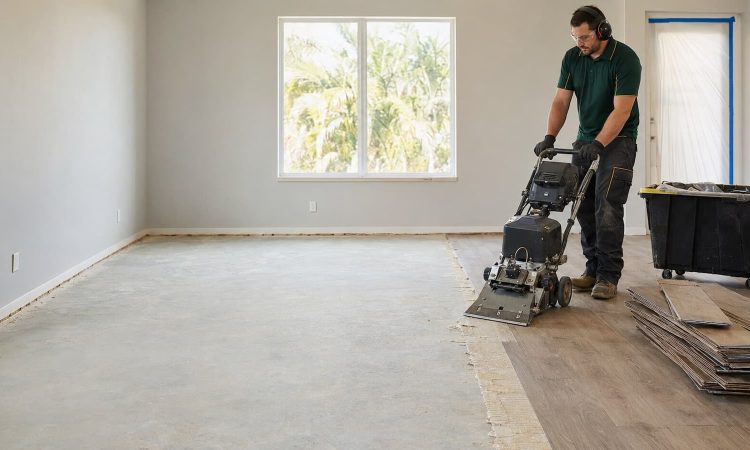
A flooring renovation often starts long before the first new plank or tile is installed. The condition of the existing floor, the material underneath it, and the way the old flooring is removed can all affect what happens next.
In Tampa, removing old flooring can uncover problems that were not visible during the initial walkthrough. Concrete slabs may have uneven areas, old adhesive can remain firmly bonded to the surface, and moisture-related issues sometimes become apparent only after the existing material is gone.
Understanding what happens during this stage helps homeowners plan a renovation with fewer surprises.
Why Removing Old Flooring Is More Than a Demolition Job
Taking out old flooring may look straightforward, but different materials require different removal methods.
Carpet can often be pulled up relatively quickly, although tack strips, staples, and adhesive residue still need attention. Laminate and floating vinyl flooring may come apart in sections, depending on how they were installed.
Ceramic and porcelain tile are a different story.
Tile is typically bonded to the substrate with thinset mortar. Removing the tile itself is only part of the work. The remaining mortar must also be evaluated, especially when the next flooring material requires a smooth, level surface.
Trying to install new flooring over an unsuitable substrate can create problems that become expensive to correct later.
What Can Be Found Under Old Tile Floors?
The most important discoveries during a renovation often happen after the existing tile is removed.
A concrete slab that appeared flat beneath the finished floor may have low spots, ridges, or patches from previous repairs. Older installations sometimes contain multiple layers of material, making the original substrate difficult to evaluate until demolition is complete.
Common conditions include:
- Thinset mortar left on the concrete
- Cracks or damaged areas in the slab
- Uneven surfaces and previous patching
- Adhesive residue from earlier flooring
- Moisture-related discoloration or deterioration
Not every condition requires major repairs. Some surfaces need only localized preparation, while others require grinding, patching, or leveling before new flooring can be installed.
The important part is identifying the condition rather than assuming the exposed floor is ready for installation.
Why Floor Preparation Matters After Demolition
Removing the old flooring creates access to the substrate. Preparing that substrate is what makes the next installation possible.
For tile, the surface needs to meet the flatness requirements of the chosen installation method and tile size. Large-format tile can be particularly unforgiving when the substrate has noticeable variations.
Luxury vinyl plank flooring also has manufacturer-specific requirements for surface flatness and condition. Even small irregularities can affect how certain flooring systems perform over time.
This is why demolition and preparation should be planned together, even when they are listed as separate stages in a renovation estimate.
Homeowners sometimes focus on how quickly the old flooring can be removed. A better question is whether the removal process will leave the surface in a condition that can be properly evaluated and prepared.
What Makes Tile Removal Different in Florida Homes?
Many Tampa-area homes have concrete slab foundations, and tile is commonly installed directly over the slab or over a prepared layer.
The age of the installation, the mortar used, and the condition of the substrate can make a substantial difference in removal time.
Some tiles release relatively easily. Others break into small pieces and leave a significant amount of thinset behind.
Moisture is another consideration in Florida. Although an exposed concrete slab may look dry, appearance alone cannot establish whether moisture conditions are suitable for the next flooring material.
When required by the flooring manufacturer or the condition of the project, appropriate moisture testing should be completed before installation.
It is also important to distinguish ordinary floor removal from work involving older materials that may require special handling. In older homes, potentially hazardous flooring or adhesive materials should be evaluated before they are disturbed.
Can Homeowners Stay in the House During Flooring Removal?
That depends on the size of the project, the rooms involved, and the removal methods being used.
Demolition can generate noise, vibration, debris, and airborne dust. Professional dust-control equipment can help reduce dust, but no removal method should be assumed to eliminate it.
Before work begins, homeowners should discuss access routes, furniture protection, HVAC precautions, and how the work area will be separated from occupied rooms.
For a smaller project, it may be practical to remain in another part of the home. A whole-house flooring replacement can require more extensive planning.
Pets, children, and anyone sensitive to dust or noise should be considered when deciding how the household will function during the project.
Why the Demolition Estimate May Not Tell the Whole Story
A removal estimate usually reflects what can reasonably be observed before work begins.
However, hidden substrate conditions are not always predictable.
For example, removing an old tile floor might reveal a slab that needs only minor grinding. In another room, the same type of flooring could conceal extensive mortar buildup or areas requiring additional repair.
A detailed estimate should help homeowners understand which activities are included and which conditions could result in additional preparation work.
It is reasonable to ask whether the quote includes debris removal, thinset grinding, surface cleaning, and any necessary preparation before the new flooring installation.
Clear separation between demolition and preparation can make the project easier to understand and budget.
A Contractor’s Perspective on Removing Old Floors
On a flooring project, the exposed substrate often tells more about the job than the old finished floor did.
A room can look perfectly normal before demolition, but once the tile comes up, the concrete may reveal high spots, leftover mortar, or areas that were patched during an earlier renovation.
That is why experienced flooring contractors pay attention to what happens after removal, not just how quickly the old material comes out.
For homeowners planning a renovation in Tampa, Bay Way Flooring, a local flooring and tile contractor, provides information about removing existing flooring before a renovation and the preparation considerations involved before a new floor is installed.
The goal is to evaluate the actual surface conditions before deciding what the next stage requires.
Questions to Ask Before Scheduling Floor Removal
A little preparation can prevent misunderstandings once demolition begins.
Ask how the contractor plans to handle dust and debris, whether old adhesive or mortar removal is included, and what happens if damaged concrete or other substrate problems are discovered.
It is also helpful to confirm whether the new flooring installation will begin immediately after demolition or whether time has been reserved for inspection and preparation.
If the renovation involves several rooms, discuss the order of work and how access through the house will be maintained.
These details may seem minor compared with selecting new tile or flooring, but they affect how smoothly the project progresses.
Final Thoughts
Removing old flooring is not simply the first physical step in a renovation. It is also an opportunity to understand the condition of the surface that will support the new installation.
In Tampa homes, where tile and concrete slab construction are common, careful removal and substrate evaluation can help identify problems before they are covered again.
The best renovation plan leaves room for what demolition may reveal. Taking the time to inspect, clean, and prepare the exposed surface can make the next stage of flooring installation more predictable and help homeowners make better decisions about their project.